
Famous Creatures and Their Reputations
Fantastic Beasts and Where to Find ThemThis flow traces how stories, appearances, and misleading signs shape the reputations of several magical creatures and the human responses they provoke.
increasing Bearing strength in each event
 decreasing
Bearing strength in each eventdecreasingThe Augurey’s Omen
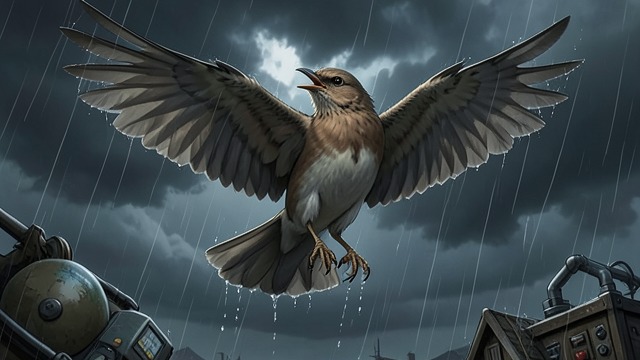
The Augurey’s Omen
A cry mistaken for prophecy
The Augurey’s mournful call is once believed to foretell death. Wizards fear passing its nest, and some are said to suffer heart attacks after hearing the sound.
Weather replaces superstition
Patient research reveals that the bird sings at the approach of rain. Its reputation shifts from death omen to household weather forecaster, though its winter moaning remains difficult for some listeners.
The change illustrates how observation can loosen fear without erasing a creature’s strangeness. A sound that once seemed supernatural in the wrong way becomes useful when interpreted accurately.
The Diricawl’s Apparent Extinction
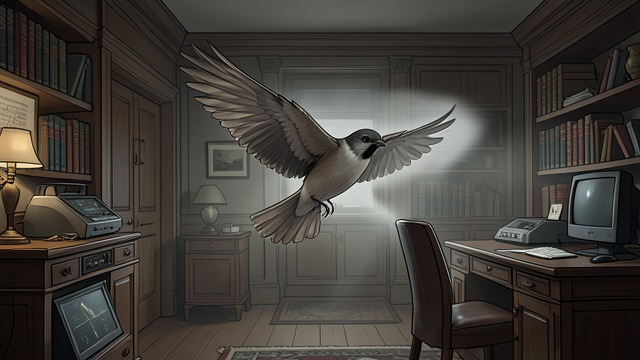
The Diricawl’s Apparent Extinction
Disappearance without extinction
Muggles believe they hunted the dodo to extinction, unaware that the Diricawl can vanish and reappear. Their account mistakes a creature’s magical escape for a species’ disappearance.
A protective false belief
The International Confederation of Wizards leaves the misunderstanding in place, deciding that it has helped increase Muggle awareness of the dangers of indiscriminate killing.
The bird’s reputation depends on what observers can see, not on its actual survival. The episode makes uncertainty about evidence central to the relationship between magical and Muggle knowledge.
The Mooncalf’s Field Patterns
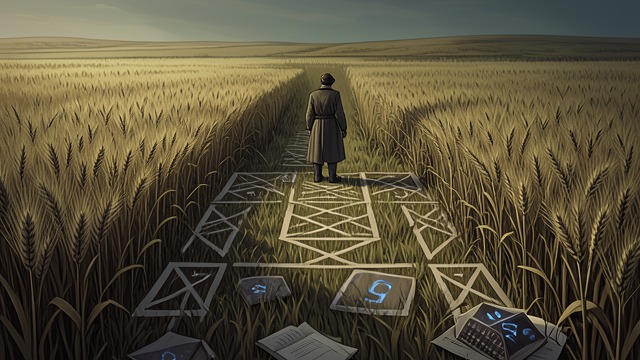
The Mooncalf’s Field Patterns
A hidden courtship
Mooncalves emerge only at the full moon and dance on their hind legs in isolated places. Their complicated movements are believed to precede mating.
A puzzle for Muggles
The dances leave geometric patterns in wheat fields, puzzling people who encounter the traces without seeing their makers. The patterns become evidence of an event whose cause remains concealed.
The account transforms a baffling landscape into a glimpse of animal life. What appears meaningless from outside gains coherence when understood in relation to the creature’s habits.
The Golden Snidget’s Sporting Fame
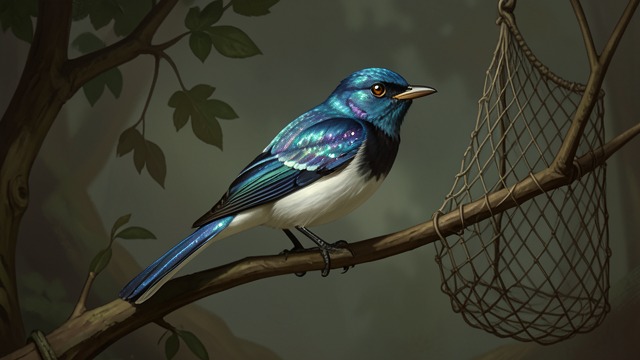
The Golden Snidget’s Sporting Fame
Beauty under pressure
The Golden Snidget’s quick turns and jeweled appearance make it an object of intense interest. Its feathers and eyes are prized, and Quidditch makes its capture a public sport.
A reputation redirected
The bird’s popularity threatens its survival until it is replaced by the Golden Snitch. The game keeps its excitement while no longer relying on the living creature.
The episode shows how admiration can become destructive when it treats a living animal as an object. A cultural change can preserve the spectacle while reducing harm to the creature.
The Unicorn’s Muggle Image
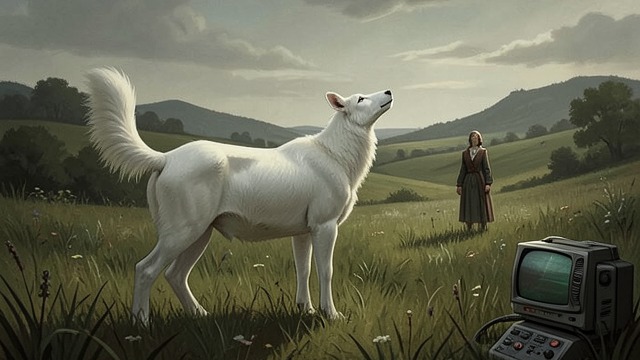
The Unicorn’s Muggle Image
A favourable reputation
The Unicorn is widely represented in Muggle stories and art, receiving an unusually positive public image among magical creatures. Newt notes that this reputation is justified.
Beauty with distance
The creature generally avoids humans and is difficult to capture. Its purity and beauty do not make it available for casual approach or possession.
The entry complicates an idealized reputation with practical boundaries. Admiration is most respectful when it does not assume that a beautiful creature exists for human access.
before patient research corrects the belief
when Muggle accounts of the dodo are discussed
at full moon
before its replacement in Quidditch
when Unicorns are described
